
The Irish Sea Rim will work as a ‘Super Cluster’, connecting, bridging, and amplifying the work and impact of the many innovation clusters, networks, and forums around the Irish Sea. We will work in partnership with these clusters and organisations, supporting cross-sector innovation, strengthening critical supply chains, opening new market opportunities, attracting inward investment, building critical skills pipelines, and creating a vibrant, externally facing identity.
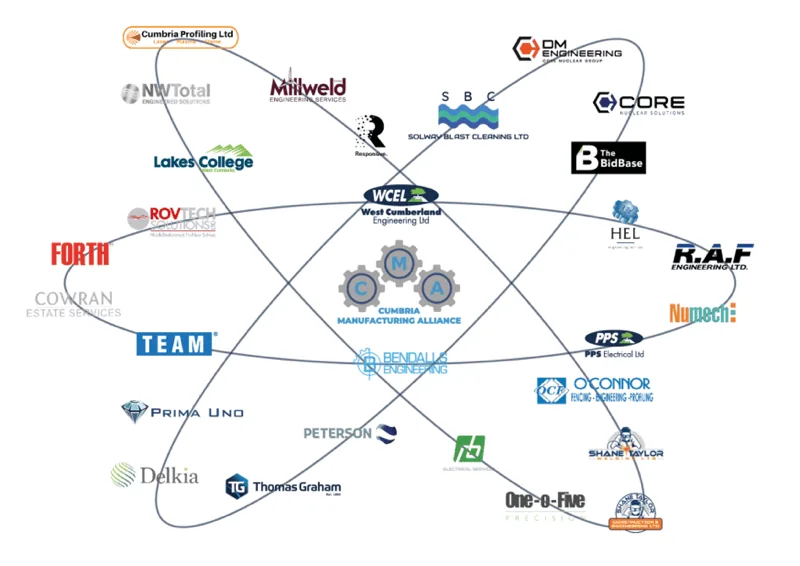
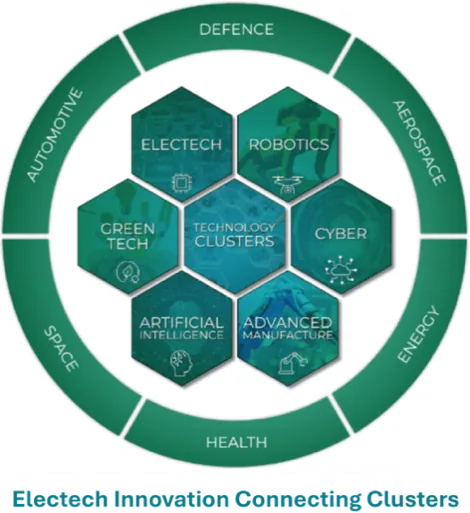 We will support the creation of place- and sector-based innovation clusters and, through our Digital Membership Platform, create trusted collaboration and networking spaces within and across sectors and disciplines. This will be a key driver for regenerative economic growth and connected prosperity and will provide a platform and voice for sectors and regions and communities which have previously experienced under-investment. The Irish Sea Rim Supercluster will work with and draw inspiration from other Innovation Clusters including the Electech Innovation Cluster and its proposed Connecting Clusters initiative to link innovation clusters across defence, aerospace, energy, health, space, and automotive[2], and the Cumbria Manufacturing Alliance (Figure 4.1). Northern Ireland has significant clusters in FinTech, advanced manufacturing, creative digital and life and health sciences, all of which have benefited from over £260m in City Deal funding for associated research centres.
MORECAMBE BAY AND SOUTH LAKES ELECTECH INNOVATION CLUSTER
The coastal region, spanning South Cumbria and North Lancashire, offers a unique blend of industrial heritage, geographic centrality, and academic excellence. It’s home to the Universities of Lancaster and Cumbria, has strategic connectivity, and energy and tech innovation arising from Morecambe Bay’s marine environment.
The Electech Innovation Cluster is a compelling example of a proactive, business-led initiative that has profoundly reshaped a regional industry. Established in 2020, the cluster was born from necessity, confronting systemic challenges within the electronics technology (Electech) sector across North West England’s Morecambe Bay region[3] from Lancaster to Barrow in Furness. Local SMEs faced persistent recruitment difficulties, a disconnect between academic curricula and industry needs, and a lack of visibility, with their specialist work often hidden under the broader "Digital" category. In response, a core group of businesses, including Teleplan Forsberg and Like Technologies, moved from informal networking to formal action, creating a cluster designed to solve these shared problems from the ground up. During this start up period Tech Lancaster (TL) an organisation supporting electronics training was established and to date TL has delivered training courses across the UK.
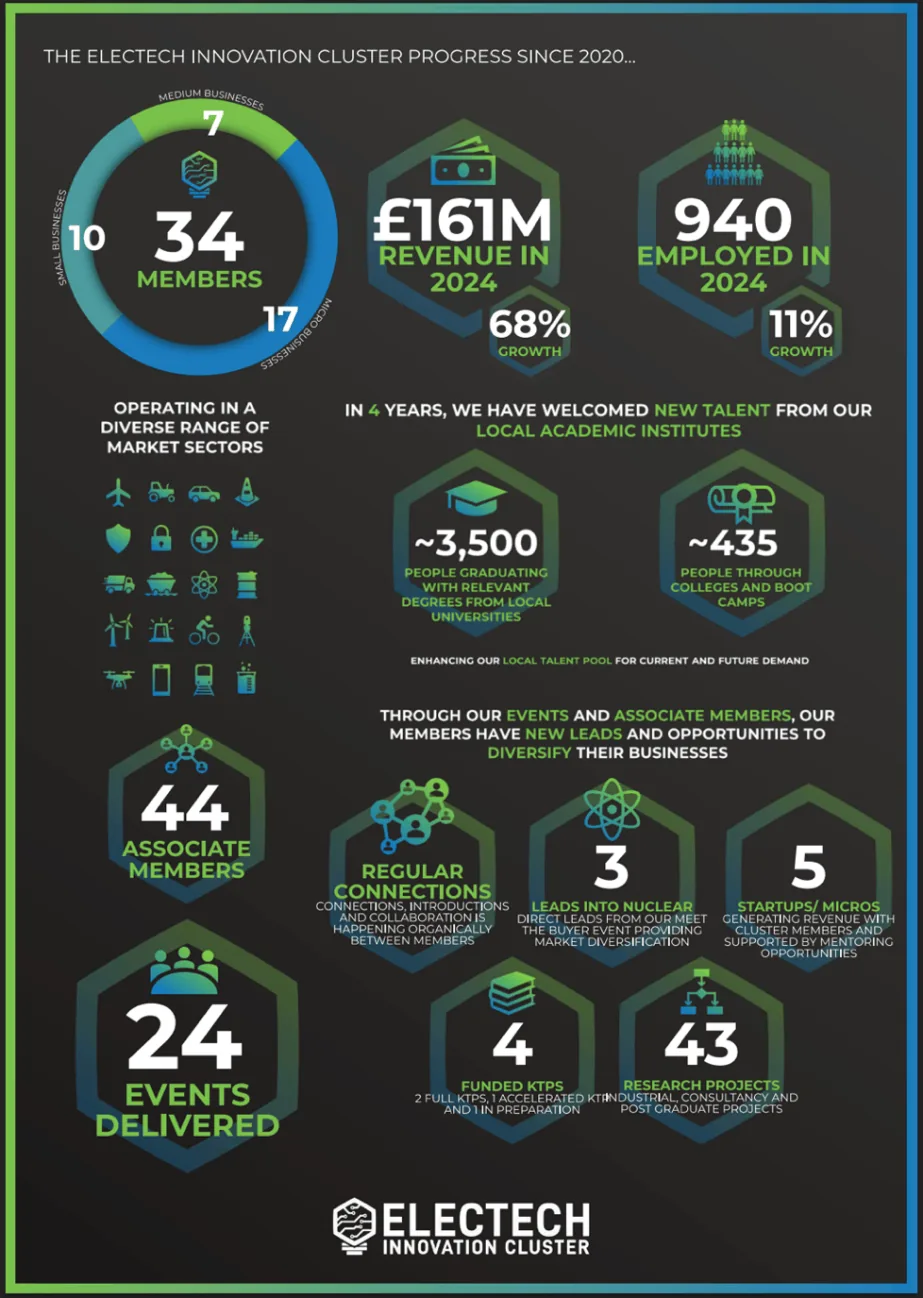
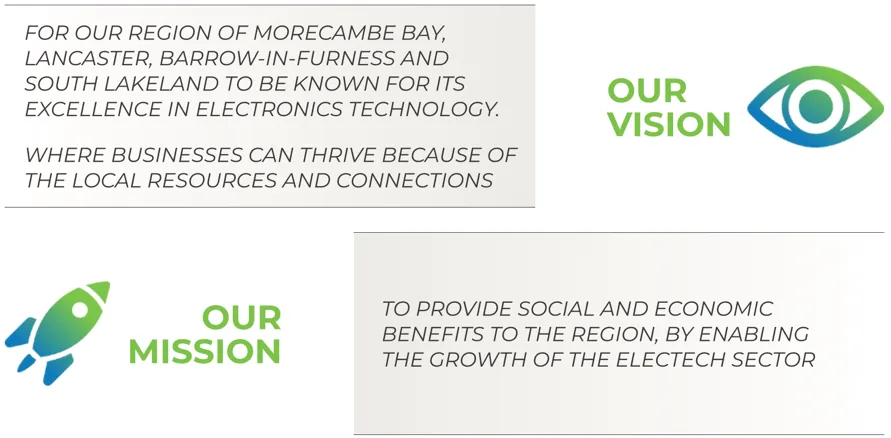 The Electech Innovation Cluster is a collaborative network of 40 Electech-based companies built upon a robust and intentional strategic foundation. It maintains a tight geographical focus by limiting full membership to Electech SMEs within the "LA" postcode, ensuring a tight-knit community where members know each other. This is complemented by a wider network of 44 Associate Members, including universities, colleges, and policymakers, who form a supportive ecosystem. All activity is guided by four clear strategic pillars, Representation, Education, Innovation, and Infrastructure, and is driven by a culture built on shared values of Collaboration, Ambition, Innovation, and Integrity.
The Electech Innovation Cluster is focused on advanced electronics and embedded technologies in core sectors including Defence and Security, Energy and Nuclear, Marine and Transport, and Agritech and Surveying. The economic impact of the defined cluster model has been extraordinary. In the face of significant national headwinds like Brexit and the global pandemic, the cluster’s members have not just survived but thrived. The collective results from 2020 to 2024 paint a clear picture of success, with a 68% increase in combined member revenue (from £96M to £161M), and an 11% rise in employment across the member companies, growing the local workforce from 849 to 940 employees.
A cornerstone of this success is the cluster's methodical approach to building a sustainable talent pipeline. It has moved beyond simple engagement to become deeply embedded in the regional education system:
- SHAPING THE CURRICULUM: Members sit on the curriculum advisory boards for Lancaster University, the University of Cumbria, and local colleges, ensuring that courses and new T-Levels align with industry needs.
- DEVELOPING FUTURE TALENT: The cluster has facilitated a constant flow of work experience placements, internships, and industry-led masterclasses, directly preparing students for careers in Electech.
- DELIVERING A SKILLED WORKFORCE: Over four years, these efforts have helped bring ~435 people through relevant college courses and boot camps and supported a regional talent pool of ~3,500 university graduates with relevant degrees.
The Electech Innovation Cluster also functions as a powerful engine for innovation and collaboration, creating tangible business opportunities:
- MARKET DIVERSIFICATION: A "Meet the Buyer" event with Sellafield generated three direct leads for members, opening up new commercial opportunities in the nuclear industry.
- NURTURING NEW VENTURES: The collaborative environment has actively supported five start-up and micro-businesses, which are now generating revenue by working with and for other cluster members.
- Driving High-Level R&D: Through deep academic partnerships, the cluster has generated four funded Knowledge Transfer Partnerships (KTPs) and over 43 distinct research projects. A dedicated "Tech Catalyst" programme with Lancaster University secured £80,000 in funding to accelerate eight member projects, including collaborative programmes on servitisation and additive manufacturing.
To underpin this growth, the cluster is proactively developing the region's infrastructure. The Electech Lab Link initiative will map and share specialist testing equipment, reducing costs for SMEs and enhancing their collective capacity to bid for major contracts. Furthermore, the cluster is a key advocate for the proposed multi-million-pound Through Life Engineering Centre at Lancaster University, a project with revolutionary potential for the UK’s industrial strategy.
Looking ahead, the Electech Innovation Cluster is not resting on its success. Its forward plan demonstrates a commitment to continuous evolution and staying ahead of industry trends, including integrating a new Net Zero strategic pillar in 2025 to champion sustainability and drive collaboration on environmental project, launching an AI Productivity Working Group to share best practices and enhance member efficiency and competitiveness, and actively
Connecting with other regional clusters in sectors like Robotics, Cyber, and Aerospace to foster cross-industry innovation and unlock new revenue opportunities.
The Electech Innovation Cluster provides a definitive blueprint for how a focused, action-orientated, and truly collaborative business-led group can generate profound and lasting economic, educational, and social benefits for its region. It is vital to the UK’s industrial strategy, regional economic rebalancing, clean energy transition, and digital infrastructure rollout, and is a powerful example of how coastal regions can lead in high-tech innovation.
A REGIONAL TECHNOLOGY SUPERHUB MODEL
One example of a possible regional technology Superhub is a North West of England four-nodal model comprising Morecambe Bay and the South Lakes (Electech Innovation Cluster – see above), Barrow-in-Furness, Workington, and Blackpool (Silicon Sands). Case studies for the individual regions are given in Section 9.
The four hubs collaborate through shared infrastructure. Subsea fibre connectivity from Blackpool links the cluster to global data routes, smart logistics between Workington and Barrow support clean freight and defence supply chains, and university partnerships across Barrow, Lancaster, and Cumbria create a unified talent pipeline.
Hub | Core Strengths | Strategic Role |
Morecambe Bay and the South Lakes (Electech Innovation Cluster) | Embedded systems, defence tech, AI, OT cybersecurity, Morecambe Net Zero (MNZ), Net Zero North West | Innovation engine & digital R&D base |
Barrow-in-Furness | Submarine manufacturing, clean energy, university of Cumbria campus, defence | Advanced manufacturing & defence innovation |
Workington | Port logistics, rail freight, clean growth zone | Green shipping & intermodal logistics |
Blackpool (Silicon Sands) | Immersion-cooled data centres, subsea fibre, solar energy | Digital infrastructure & global connectivity |
The combined economic and social impact of the Superhub makes it a strategic asset for regional rebalancing, with the potential for thousands of high value jobs in engineering, digital tech, and clean energy, a resilient regional economy less dependent on legacy industries, and a model for place-based innovation that rivals major UK cities.
Net Zero North West (NZNW) is an industry-led cluster acting as a public and private sector investment accelerator for industrial decarbonisation and clean growth projects in the North West. NZNW are committed to delivering a co-ordinated net zero vision for our region and that’s why we unite businesses, regional leaders, and academia to deliver on our mission.
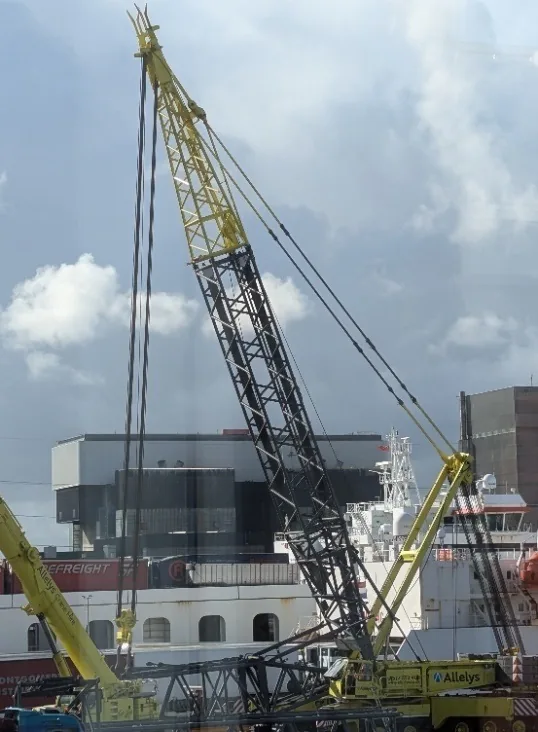
Heysham Port and Heysham Nuclear Power Station. Image Credit: Irish Sea Rim