IRISH SEA FERRY CROSSINGS
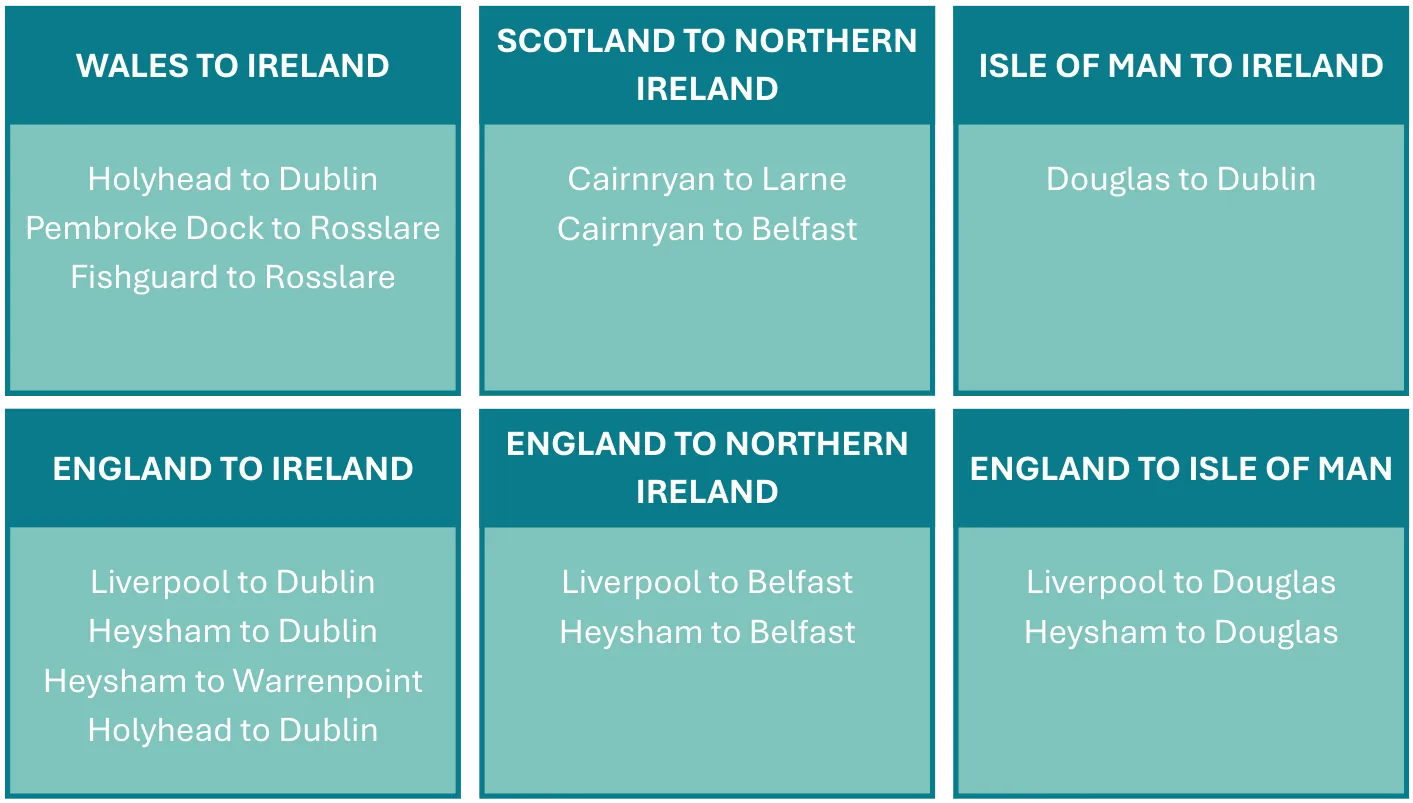
Irish Sea ferries are the vital maritime arteries connecting the economies, societies, and communities of the UK and Ireland. These ferry routes are indispensable for both trade and social connectivity. They form the backbone of commerce between nations, with the Liverpool to Dublin crossing noted as one of the most popular routes for freight and trucks, while the Cairnryan-Belfast service is a major route for transporting goods between Northern Ireland and the rest of the UK. The efficiency of these links, such as the Stena Line Fishguard to Rosslare service being the fastest crossing to Ireland, underpins regional supply chains. In parallel, these services are crucial for tourism and community, with the Holyhead to Dublin route being popular for holidaymakers due to its short duration. From Scotland to Northern Ireland and the Isle of Man to Ireland, these crossings connect families and communities, reinforcing deep cultural ties. The Heysham-Warrenpoint (image below) and Heysham-Dublin routes are for freight only via the operator Seatruck Ferries operated out of the Peel owned Heysham Port.
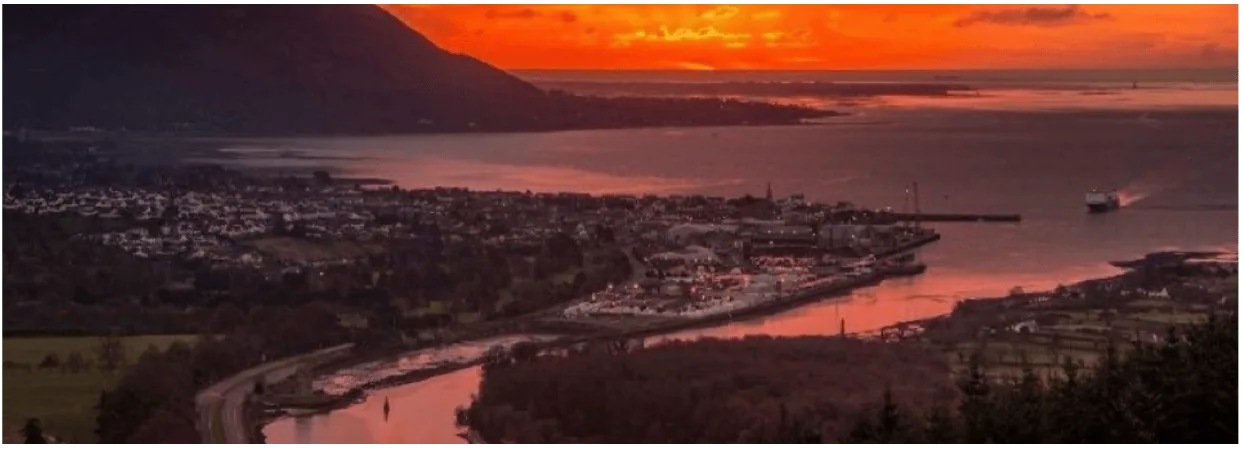
Seatruck Freight Ferry arrival in Warrenpoint, Northern Ireland. Image Credit Paddy Higgins, Flagstaff
The Irish Sea Rim is perfectly positioned to support and enhance these vital links by acting as a central hub for collaboration and innovation. By uniting ferry operators, port authorities, and government bodies, the initiative can advocate for route development, streamline port operations, and launch integrated tourism campaigns to strengthen the entire network. Furthermore, the Irish Sea Rim can drive a green transition by strengthening existing maritime networks and innovation hubs by supporting connections between universities and maritime businesses to pioneer sustainable solutions like alternative fuels and more efficient vessel designs. This collaborative approach can secure the investment needed for green infrastructure, helping the sector move towards a low-carbon future.
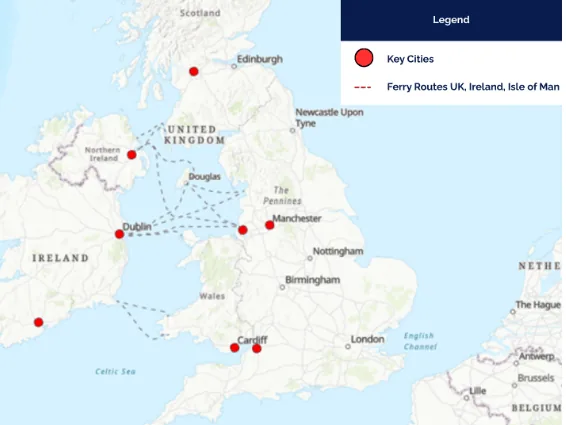
Ultimately, while shipping presents environmental challenges, ferry travel is a critical component of a sustainable transport network for the region. The Cairnryan to Larne route, as the shortest route across the Irish Sea, highlights how operational efficiency can align with environmental goals. The Irish Sea is home to 10 Marine Conservation Zones (MCZs); a recent three-year initiative led by the Cumbria Wildlife Trust mapped ways that wildlife trusts – and their wider place stakeholders – can work across boundaries and borders to protect nature, enhance biodiversity and support people to improve their health, wellbeing and connection to place through active, outdoor engagement.
By embracing new technologies and the collaborative strategies championed by the Irish Sea Rim, the ferry sector, working in partnership with wildlife trusts, can strengthen its role as an economic engine while becoming a leader in environmental stewardship, ensuring the long-term prosperity of the communities lining the Irish Sea.
A central concept and opportunity for this sector, and an area in which the Irish Sea Rim could help create significant impact, is the Crosscurrent Framework. This is a proposed approach to optimise this complex network by integrating ports, syncing inland transport, and using AI for demand-driven routing. This is critical in a sea that is of major economic importance for regional trade and shipping. In the context of the Irish Sea region, this framework could:
- INTEGRATE REGIONAL PORTS: Coordinate schedules and cargo between major ports like Dublin, Belfast, Liverpool, and Holyhead using real-time data on tides and congestion.
- OPTIMISE FERRY ROUTES: Employ weather modelling to protect perishable goods and ensure efficient crossings while understanding and mitigating risk to MCZs
- CREATE HYBRID INLAND DELIVERY: Sync rail and road logistics to connect coastal ports with inland cities such as Manchester and Glasgow, with automated systems to re-route freight during disruptions.
- ENABLE DEMAND-DRIVEN ROUTING: Use AI-powered forecasts to predict seasonal demand and fine-tune delivery schedules, reducing waste and spoilage8
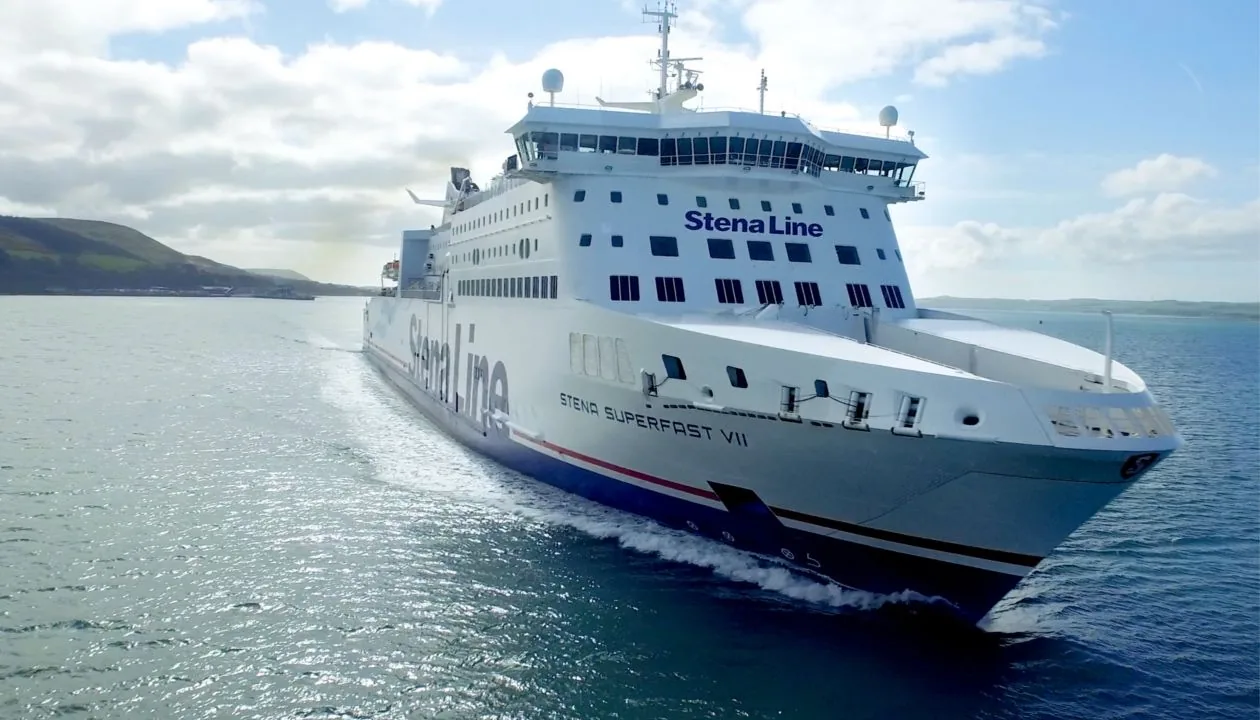
Stena Line operating in the Irish Sea Rim, Image credit: unknown
MANAGING AND MITIGATING UNPLANNED DISRUPTIONS TO IRISH SEA PORTS
Ports around the Irish Sea rim form a critical economic corridor, facilitating substantial trade and passenger movement between Great Britain and the island of Ireland. The efficiency of these ports, particularly high-volume Roll-on/Roll-off (RoRo) hubs like Holyhead, is vital. However, these operations are vulnerable to unplanned events. The significant damage sustained by Holyhead Port during Storm Darragh in December 2024 served as a stark reminder of this vulnerability.
In early December 2024, Storm Darragh caused major damage to infrastructure at Holyhead Port, leading to the immediate closure of its two main ferry berths (Terminal 3 and Terminal 5). The event caused a complete cessation of services on the primary Holyhead-Dublin route, leading to a severe backlog of freight and passenger traffic. Terminal 5 was partially reopened on January 16, 2025, allowing both Stena Line and Irish Ferries to resume services on an adjusted, single-berth timetable, restoring route capacity but not full operational flexibility. Following extensive repairs to the severely damaged Terminal 3, the port was declared fully reopened and operational on Friday 18th July 2025. This allowed for the resumption of normal, synchronised sailing schedules favoured by the logistics sector.
Significant capital expenditure was required for underwater inspections, structural repairs, and engineering works to both berths. A post-incident inquiry by the Senedd (Welsh Parliament) highlighted the substantial economic impact on hauliers, local businesses in Anglesey, and the wider UK-Ireland supply chain, with ferry operators incurring significant costs from vessel redeployments, schedule alterations, and reduced traffic during the seven-month-long disruption.
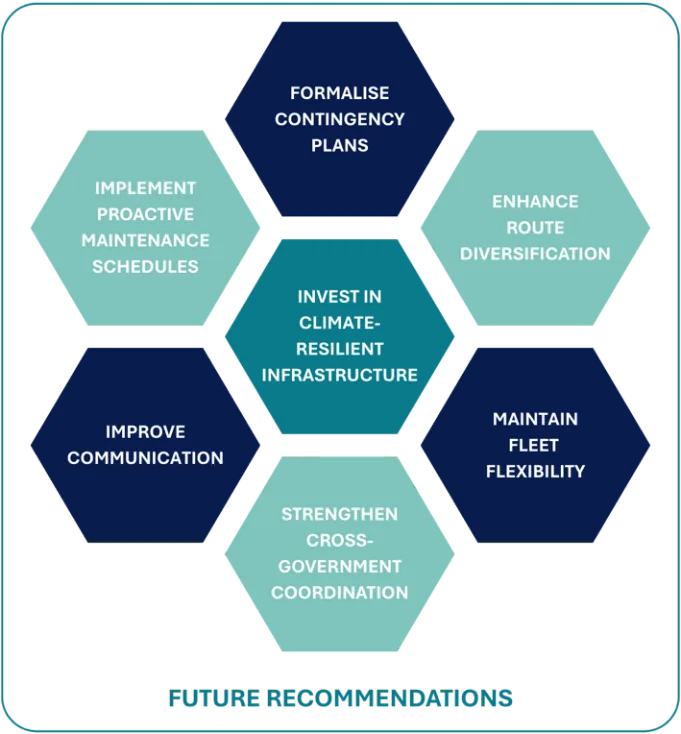 The Welsh and Irish Governments established a multi-stakeholder task force in March 2025 comprising government officials, port operators, ferry companies, and logistics representatives. Its primary objective is to develop robust contingency plans, assess infrastructure needs, and formalise cross-agency communication protocols for future disruptions at any Irish Sea port. Infrastructure planning has been accelerated with Stena Line Ports planned maintenance works at Holyhead (Terminal 5) from September to November 2025 to enhance long-term reliability. The event has also amplified calls for strategic investment in port infrastructure to better withstand climate change-driven weather events. This aligns with UK and Irish government strategies focused on securing critical supply chains and investing in climate adaptation.
Given the future likelihood of more extreme weather events in the Irish Sea region, we have undertaken a preliminary assessment of the feasibility of alternative logistical options for Holyhead to mitigate the impact of such events. A summary of this is given below.
 LIVERPOOL / HEYSHAM TO DUBLIN / BELFAST: Proven to be a crucial relief valve, especially for freight. However, the significantly longer sea crossing (~8 hours) adds cost and complexity compared with the Holyhead-Dublin route (~3.5 hours). May suit freight originating/destined for Northern England/Scotland but this requires sufficient capacity at these ports and on vessels. Established routes exist but may lack the frequency or total capacity compared with Holyhead-Dublin, and they require coordination and available slots.
- FISHGUARD / PEMBROKE DOCK TO ROSSLARE: These South Wales routes were vital during the closure, with operators successfully redeploying larger vessels to boost capacity. While the sea crossing is shorter, incurring lower costs, this is offset by longer road journeys for goods originating in the Midlands and North of England. Matching the volume of Holyhead could be challenging long-term without sustained investment or vessel redeployment.
- CAIRNRYAN TO BELFAST / LARNE: While geographically unsuited as a direct replacement for Holyhead-Dublin traffic, these routes are a critical part of the overall Irish Sea network, and maintaining their capacity is essential for overall resilience.
While the financial and logistical impacts were severe, the establishment of a resilience task force and renewed focus on infrastructure investment demonstrate a commitment from government and industry to the long-term security of this vital economic corridor. Investment in port resilience, robust contingency planning, and operational logistical flexibility, is essential to mitigate the impacts of future unplanned events.
Port infrastructure, Dublin, Image credit: Irish Sea Rim