Maritime and Innovation Case Studies
LIVERPOOL (NORTH WEST NUCLEAR ARC)
The North West Nuclear Arc (NWNA) is a unique nuclear sector cluster spanning the North of England and North Wales1. It incorporates all the facilities and capabilities across the whole nuclear lifecycle, from fuels to energy production, and the management of waste and decommissioning2. The NWNA is unique in the UK and widely recognised as a world-class, self-contained, end-to-end nuclear system, all within a very compact geography3.
The NWNA nuclear cluster’s vision is to provide sustainable, clean energy to the nations of the UK and support high-value local jobs, livelihoods, and business growth in some of its most disadvantaged places4. This is achieved by working with key industry stakeholders, local and national governments, and communities to create a shared vision for nuclear within the geography.
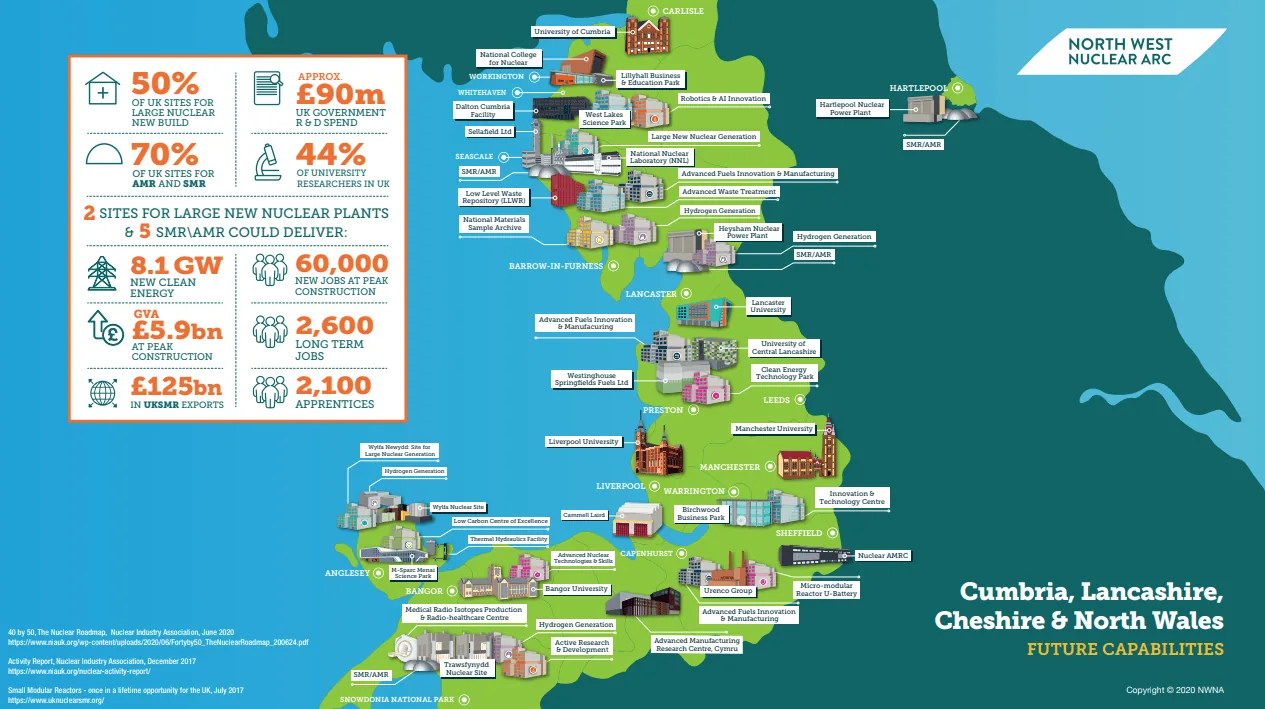
This will be achieved by working with key industry stakeholders, local and national governments and communities to create a shared vision for nuclear within the Arc’s geography, and by communicating the vision and messages about the role of nuclear as a key contributor to a mixed clean energy system as well as its other economic and societal benefits.
Nuclear offers a sustainable, clean, low-carbon, reliable energy source. With new approaches to financing and business practice around new nuclear sites and technologies, it can be delivered more cheaply. It does not have to cost the earth, either environmentally or financially. Nuclear is key to keeping the lights on and powering the electrification of homes and transport as the UK transitions the energy system away from coal and gas. The North West Nuclear Arc is an energy sector with a geography spanning North Wales and North West England and is a key engagement partner for the Irish Sea Rim.
The Offshore Energy Alliance (OEA) represents the North Wales and North West region’s offshore supply chain cluster. Linked to the Offshore Wind Sector Deal, the aim of the NWNA cluster is to encourage and promote further collaboration between key players in the offshore sector to deliver increased benefits to local supply chain businesses within coastal communities. Key objectives and activities are:
- PROMOTING INVOLVEMENT: The OEA works to promote wider involvement in offshore wind and other low-carbon energy sectors, ensuring that opportunities are accessible to a greater number of people and businesses across the region.
- SUPPORTING LOCAL BUSINESSES: The Alliance aims to raise awareness of upcoming opportunities within the region and beyond, helping local businesses to engage with energy projects and supply chains.
- DRIVING INNOVATION AND SKILLS DEVELOPMENT: The OEA focuses on innovation, training, and skills development to ensure a highly skilled workforce that can meet the future demands of the energy sector.
- COLLABORATION WITH OTHER CLUSTERS: The Alliance collaborates with other UK clusters and local authorities to promote relevant technologies and ensure that local benefits are maximized.
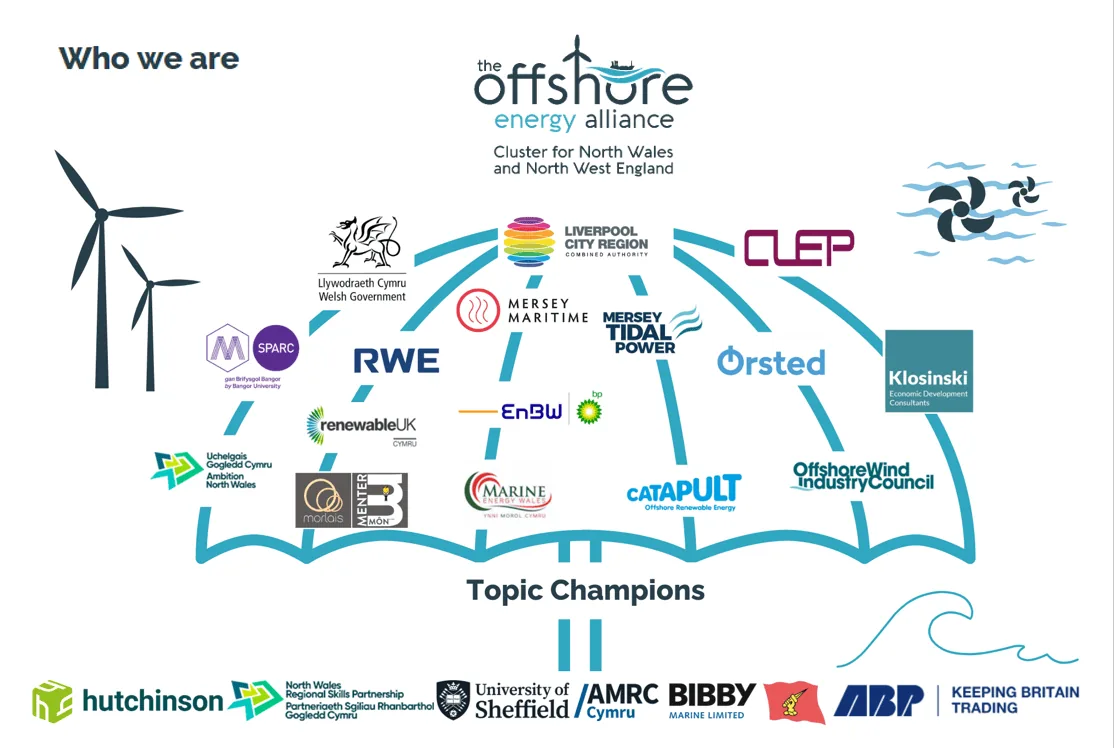
The Irish Sea Rim is collaborating with the Offshore Energy Alliance as a key supply chain organisation that operates around the Irish Sea coast from north Wales through northwest England to the Scottish Border.
BRISTOL AND THE GREAT SOUTH WEST
The Great South West is a dynamic region and economic powerhouse encompassing Cornwall, Devon, Somerset, Dorset, and Wiltshire. This region is rapidly emerging as a unified UK leader in clean energy, advanced manufacturing, and creative innovation. Bristol, the largest city in South West England with a population of nearly 480,000, serves as the region’s primary urban innovation anchor, leveraging its historic port status and modern reputation for sustainability and technology to drive the entire region's growth.
Clifton Suspension Bridge, Bristol. Image Credit:
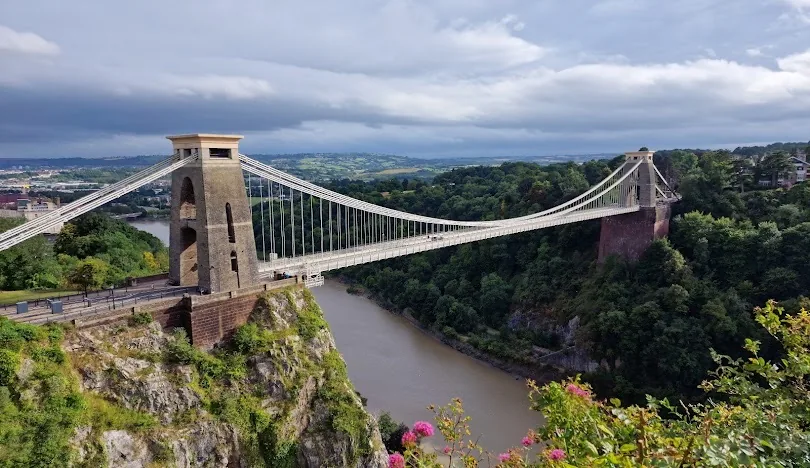 The entire Great South West region is a magnet for talent and investment, powered by a diverse economy and world-class research institutions like the
University of Bristol and the University of the West of England (UWE). While Bristol acts as a major hub, the region’s industrial and research strengths create a powerful and interconnected ecosystem.
Key sectors include:
- AEROSPACE & DEFENCE: The region is a critical national cluster for aerospace, anchored by major players like Airbus, Rolls-Royce, and GKN Aerospace in the Bristol area.
- CREATIVE & MEDIA: As a UNESCO City of Film, Bristol is the heart of the region's creative industries, which lead the nation in immersive tech, design, and film. This includes world-renowned institutions like the BBC Natural History Unit and Aardman Animations.
- GREEN TECH & SUSTAINABILITY: With Bristol recognised as one of the UK’s leading green cities, the entire region benefits from strong climate policies and a determined push for net-zero infrastructure.
- FINTECH & CYBERSECURITY: The area is a growing hub for digital finance and secure communications technologies, attracting startups and established firms.
The Great South West is a unified partnership at the forefront of the UK’s clean energy strategy, positioning itself as a "Clean Energy Superpower". This ambition is backed by a portfolio of large-scale infrastructure projects spread across the region, reshaping its energy landscape and economy. These cornerstone projects include:
- HINKLEY POINT C (SOMERSET): This is Europe’s largest infrastructure project, which is injecting £1.5 billion annually into the regional economy during construction.
- AGRATAS GIGAFACTORY (SOMERSET): One of the UK’s largest battery manufacturing sites is currently under construction here, set to power electric vehicles and energy storage solutions.
- FLOATING OFFSHORE WIND (CELTIC SEA): The region is developing multi-gigawatt projects, establishing it as a global leader in marine renewables.
- SOMERSET TIDAL LAGOON PROJECT: This major initiative will harness the area's significant tidal power resources.
- CORNWALL MARINE NETWORK & CLUSTER: This innovation cluster connects SMEs around the whole SW and is based in Cornwall.
- DORSET CLEAN ENERGY SUPERCLUSTER: A dedicated hub focused on advancing solar, green hydrogen, and grid innovation for the region.
Beyond energy, the Great South West is a powerhouse in advanced manufacturing, generating £7.9 billion in GVA annually across key sectors like aerospace, marine, nuclear, and sustainable plastics. This industrial base is supported by the High Value Manufacturing Catapult and innovation hubs like Dorset Innovation Park. Strategic connectivity is central to the region's success, with a multi-port strategy across Bristol, Plymouth, and Falmouth designed to support global trade and clean logistics. The Plymouth & South Devon Freeport unlocks significant tax incentives for the maritime and defence sectors, while Spaceport Cornwall provides an operational hub for satellite launches. These regional assets are linked by key transport upgrades, including Bristol's £800 million investment in its transit network, which enhances connectivity across the entire area.
Looking to the future, Bristol and the Great South West form a pivotal anchor in the vision for a UK–Ireland Innovation Arc. This is not just a geographic link but a strategic alliance with other leading innovation hubs, including Glasgow, Manchester, and the Dublin–Belfast Economic Corridor. The arc's mission is to create a transnational corridor for collaboration on climate technology, advanced manufacturing, and digital trade. By 2035, this ambitious collaboration aims to attract over £15 billion in investment and support more than 100,000 high-value jobs for its partner regions. By connecting its unique regional strengths to this wider network, the Great South West is cementing its role as an indispensable engine of the UK economy.
Figure 9.2: The UK-Ireland Innovation Arc Regional Anchors and Strengths
Region | Core Strengths |
Bristol and the Great South West | Clean energy (offshore wind, hydrogen), aerospace, creative tech, immersive media |
Glasgow City Innovation District | Quantum tech, photonics, healthtech, industrial informatics, civil innovation |
ID Manchester | Graphene, biotech, sustainable urbanism, digital futures |
Dublin-Belfast Economic Corridor | Fintech, cybersecurity, agri-tech, cross-border logistics, EU-UK trade gateway |
These regions are already part of national and international innovation networks, including the GW4 Alliance (Bristol, Bath, Cardiff, Exeter) and the UK Innovation Districts Group. The collaboration blueprint is summarised below:
- GREEN ENERGY & MARITIME INNOVATION: Bristol and the Celtic Sea lead on floating offshore wind, while Glasgow and Belfast support port electrification and green shipping corridors. Joint R&D in hydrogen logistics, battery storage, and clean maritime fuels.
- DIGITAL INFRASTRUCTURE & AI: Blackpool’s Silicon Sands and Dublin’s subsea fibre link enable real-time data exchange across the arc. Manchester and Glasgow contribute AI platforms, digital twins, and quantum-secure communications.
- ADVANCED MANUFACTURING & DEFENCE: Barrow and Bristol anchor the UK’s submarine and aerospace programmes. Manchester and Belfast support biotech, materials science, and supply chain resilience.
- INCLUSIVE GROWTH & SKILLS: Shared investment in STEM education, apprenticeships, and innovation campuses.
CARDIFF
Cardiff, the capital of Wales, is a dynamic economic and cultural centre strategically situated on the nation's south coast near the Bristol Channel. As Europe's youngest capital city, designated in 1955, it's now home to over 370,000 residents and is known for its vibrant bilingual culture. Cardiff’s coastal location is central to these plans, positioning the city as a pivotal hub in a proposed UK-Ireland innovation alliance designed to harness the economic potential of the Irish Sea Rim.
Cardiff is the economic anchor for the wider City Region, with its strength built on a diverse portfolio of sectors including:
- FINANCIAL & PROFESSIONAL SERVICES: The city hosts the headquarters of large corporations like Admiral Group and Legal & General.
- CREATIVE & MEDIA: This industry is also a significant contributor, with a flourishing ecosystem that includes BBC Wales and the acclaimed Bad Wolf Studios. Furthermore, Cardiff is a hub for
- LIFE SCIENCES & HEALTH INNOVATION. This is driven by cutting-edge research at Cardiff University and the University Hospital of Wales.
These established strengths are complemented by emerging clusters in high-growth areas like Cybersecurity, AI, and Compound Semiconductors.
This powerful economic activity is fuelled by a talent-rich innovation ecosystem underpinned by three key universities which specialise in research and innovation. Cardiff University is a member of the Russell Group and has a global research impact in fields such as neuroscience and climate change. It is complemented by Cardiff Metropolitan University, which is known for its strengths in design and entrepreneurship, and by the University of South Wales, which has a strong focus on cyber industries and public services. This academic foundation is supported by targeted investment, including a £50 million Innovation Investment Fund, designed to accelerate the growth of high-potential sectors, including clean energy, medtech, and compound semiconductors. Cardiff Capital Region has also been identified for up to £30 million of earmarked funding from the UK Research and Innovation Local Innovation Partnerships Fund.
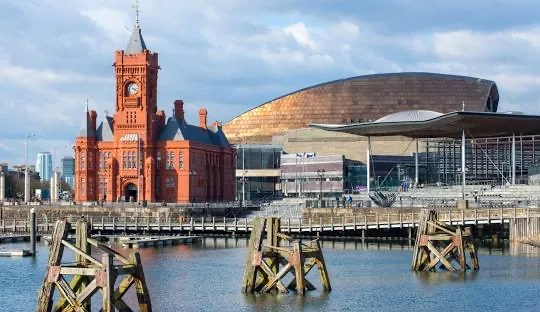 Cardiff is a key proponent of a Transnational Innovation Corridor, a strategic alliance that would connect it with Bristol, Dublin, and Glasgow. This vision aims to create a globally competitive zone spanning the Irish Sea and the western UK, focused on clean growth, digital infrastructure, and inclusive prosperity Each city brings unique strengths to the partnership: Cardiff contributes expertise in cybersecurity and life sciences; Bristol in aerospace and green energy; Dublin in fintech and AI; and Glasgow in quantum technology and smart manufacturing. The collaboration is already taking shape through initiatives like the GW4 Alliance and the SETsquared Partnership, and the Irish Sea Rim is keen to work with stakeholders to support the initiative.
A central pillar of this transnational strategy is a distinct focus on maritime innovation and green growth. The Transnational Innovation Corridor is envisioned as a leader in sustainable maritime activity, leveraging the collective strengths of its partner cities and their ports. Core initiatives include the development of green shipping corridors connecting Dublin, Holyhead, Liverpool, and Belfast with the ports of Cardiff and Bristol, enabling low-carbon freight and passenger movement. This is coupled with a commitment to joint research and development in next-generation technologies like floating offshore wind, hydrogen logistics, and clean maritime fuels. The redevelopment of the Aberthaw Power Station into a net-zero innovation campus will serve as a crucial anchor site for these activities.
CORK
Cork, Ireland’s second-largest city, can be described as a maritime hub which is driving regional growth. The city is strategically positioning itself as a leader in maritime trade, innovation, and sustainable development. Situated on the River Lee with its city centre built on an island, Cork's identity is intrinsically linked to its estuarine geography; its Irish name, Corcaigh, translates to "marsh". With a city population of 224,000 and a wider metropolitan area of over 305,000 residents, Cork’s historic nickname, "The Rebel City," earned through resistance during past conflicts, reflects a resilient and independent spirit that now drives its modern economic and cultural growth.
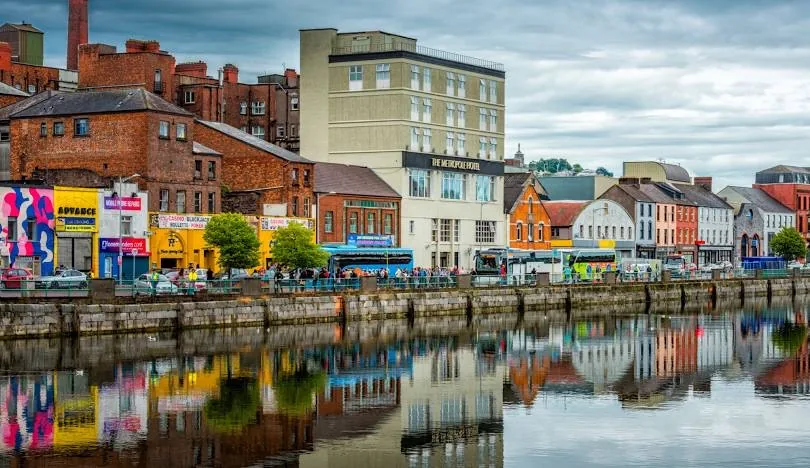 At the heart of Cork's economic strategy is its rich maritime heritage and world-class infrastructure. The city is home to Cork Harbour, one of the largest natural harbours in the world, which serves as the foundational asset for its thriving economy. This natural advantage has positioned the Port of Cork as a critical node in the Irish Sea Rim, supporting extensive trade, energy, and tourism activities. Looking to the future, the port is a key player in Ireland’s transition to a green economy, actively developing its role in pioneering green shipping corridors and supporting the logistics for offshore renewables.
While the maritime industry is its anchor, Cork has successfully cultivated a diverse and robust economic ecosystem. This diversification provides resilience and fuels a dynamic innovation landscape. The city is a major European hub for both the pharmaceuticals sector, with a significant presence from companies like Pfizer and Novartis, and the technology sector, hosting Apple's European headquarters. These industries are complemented by strong clusters in food and agri-tech9. This powerful economic mix is guided by Ireland’s Southern Region Innovation Strategy, which fosters collaboration in high-growth areas like clean energy, digital health, and smart manufacturing.
To support this economic dynamism, Cork is undergoing a wave of transformative infrastructure projects focused on enhancing global trade links. A primary investment is the €456 million M28 Cork–Ringaskiddy Motorway, a crucial 11 km link designed specifically to improve freight access to the Port of Cork and stimulate future industrial growth. Directly within the port, a €100 million investment in the CORE1 Berth is underway to expand capacity for container and bulk cargo. This expansion directly supports Cork’s strategic goals in green shipping and offshore energy logistics.
DUBLIN-BELFAST ECONOMIC CORRIDOR
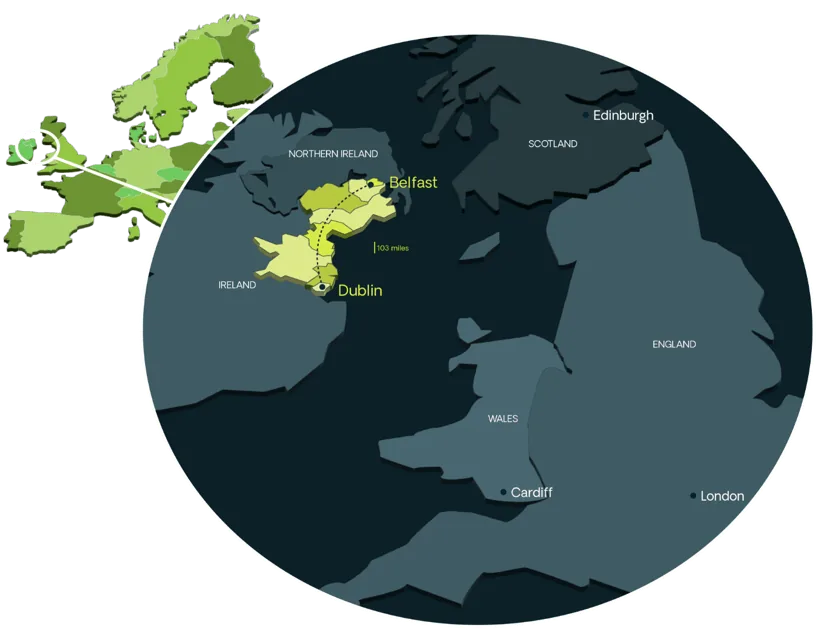 The Dublin-Belfast Economic Corridor (DBEC) is a powerhouse of cross-border collaboration, innovation, and investment. Stretching 100 miles between the island of Ireland's two largest cities, this strategic region is home to over 2 million people—more than one-third of the island's population. The corridor's core ambition is to transcend its geographical boundaries and establish itself as a leading European economic corridor. By uniting the economies of Dublin and Belfast, along with key urban centres like Lisburn, Newry, Drogheda, and Dundalk, the DBEC is creating a seamless ecosystem engineered for inclusive growth, climate action, and economic resilience.
DBEC’s primary strength is its unrivalled strategic location, serving as a pivotal gateway to UK, EU, and global markets. This access is underpinned by a world-class infrastructure network designed for the rapid movement of goods, people, and data. Key assets include:
- MARITIME AND AIR ACCESS: A formidable network of six seaports, including the major hubs of Dublin, Belfast, Warrenpoint, and Greenore, complemented by three international airports.
- LAND AND DIGITAL NETWORKS: High-speed road and rail links provide seamless terrestrial connectivity , while full fibre broadband and expanding 5G coverage ensure the corridor is at the forefront of the digital economy.
DBEC has created a vibrant ecosystem of talent and enterprise and a fertile ground for business, hosting over 125,000 enterprises, from global companies to agile, high-growth startups. This dynamic environment is fuelled by a synergistic collaboration between eight local councils and two world-class universities – Queen's University Belfast and University College Dublin. This partnership ensures a robust pipeline of highly skilled graduates ready to drive innovation. Supported by landmark government initiatives like the Belfast Region City Deal and Ireland 2040, the corridor boasts high rates of entrepreneurship and business survival, making it a proven location for long-term success
DBEC’s economic resilience is built on a diverse portfolio of high-value, knowledge-intensive sectors. These industries not only drive growth but also attract significant international investment and top-tier talent. The primary sector strengths include:
- ICT & CYBERSECURITY: A globally recognised cluster of technology and digital security firms.
- ADVANCED MANUFACTURING: A hub for cutting-edge engineering and production processes.
- AGRI-FOOD: A leader in food production, innovation, and sustainable agriculture.
- CREATIVE INDUSTRIES: A flourishing centre for media, design, and digital content creation.
 PROFESSIONAL & FINANCIAL SERVICES: A sophisticated ecosystem providing critical support services to global corporations.
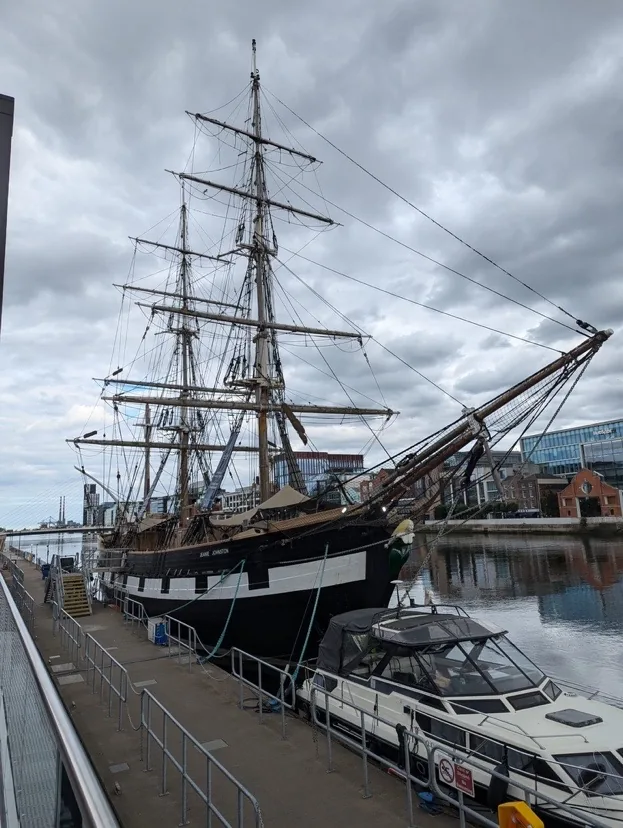
DBEC is at the epicentre of the Irish Sea region's decarbonisation strategy. It is a key partner in the green shipping revolution and is reimagining maritime trade for a sustainable future. A flagship project is the Dublin-Holyhead Green Corridor initiative, which is transforming the busiest roll-on/roll-off freight corridor between the UK and Ireland – handling 83% of RoRo freight into Ireland. Led by industry giants Irish Ferries and Stena Line and supported by a consortium including EDF UK R&D and Maynooth University, the project is developing a zero-emission maritime route through feasibility studies on e-methanol, shore-side power, and infrastructure upgrades. This positions the DBEC as a central node in a clean shipping loop connecting Belfast, Dublin, Liverpool, and Holyhead.
The corridor’s green maritime ambition provides a launchpad for a wave of technological and logistical innovation. The strategy is to create an integrated, intelligent, and sustainable trade network through targeted R&D and investment. Key opportunities being actively pursued include:
- SMART PORT INFRASTRUCTURE: Deploying AI-driven logistics platforms for cargo optimisation and emissions tracking, alongside digital twins and blockchain customs systems to streamline cross-border trade.
- OFFSHORE RENEWABLE ENERGY: Leveraging the corridor's proximity to rich offshore wind zones to power port electrification and pioneer green hydrogen production.
- MARITIME R&D AND SKILLS: Partnering with Queen’s University Belfast and University College Dublin to establish a dedicated Maritime Innovation Lab and develop advanced training programmes in clean maritime tech and digital logistics.
The Dublin-Belfast Economic Corridor represents one of the most compelling investment destinations in Europe. It offers a powerful combination of strategic location, a thriving business environment, and a clear vision for sustainable growth. The investment model, based on public-private co-investment and anchored by the £1 billion+ Belfast Region City Deal, is designed to de-risk projects and maximise returns. With access to a rich blend of EU innovation funding, UK green corridor grants, and private capital, the DBEC provides an exceptional opportunity to invest in an ecosystem where regional ambition meets international opportunity, with sustainability at its heart.
GLASGOW CITY INNOVATION DISTRICT
Glasgow is pioneering a new era of economic growth through the Glasgow City Innovation District (GCID), Scotland’s flagship hub for innovation, enterprise, and collaboration. Launched in 2019, GCID is living ecosystem where academia, industry, and government converge to shape the future. Anchored by the prestigious University of Strathclyde, this initiative is a cornerstone of the city's ambition to become a world-leading hub for technology, health, and sustainability.
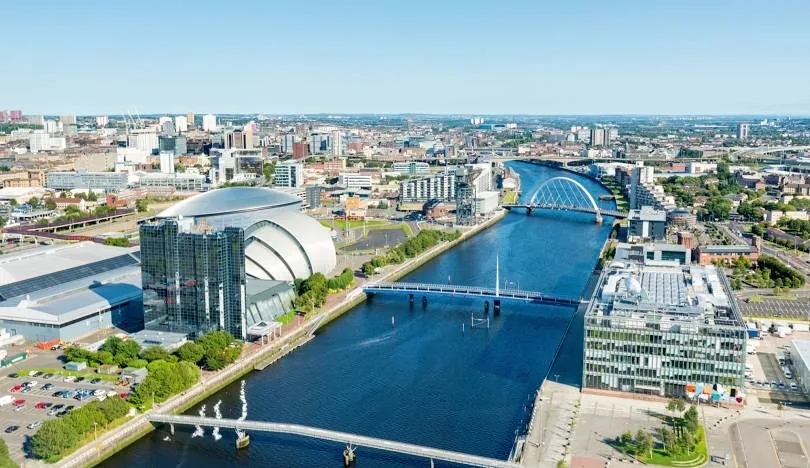 The district's power lies in its role as the heart of the broader Clyde Innovation Corridor. This strategic vision connects multiple specialised districts along the famous river, creating a seamless network of expertise. It integrates the Glasgow Riverside Innovation District (GRID), which focuses on clinical innovation and media tech, with the Advanced Manufacturing Innovation District Scotland (AMIDS), a centre for manufacturing and life sciences near Glasgow Airport. This corridor sets the stage for ambitious, large-scale projects that leverage the region's combined strengths.
The most transformative development within the Clyde Innovation Corridor is the
Scottish Marine Technology Park (SMTP). This ambitious project is set to revitalise a vacant and derelict site into a world-class Maritime Technology and Innovation Deployment Park. The SMTP represents a bold new chapter for the Clyde, creating a unique and bespoke maritime ecosystem strategically located on its deep-water channel. The core mission of the SMTP is to establish a self-sustaining cluster where modern manufacturing, operational, and research organisations can thrive. The park is designed to foster unprecedented collaboration between Tier 1 and 2 suppliers, academic institutions, and innovative start-ups. By co-locating these entities, the SMTP aims to harness and accelerate innovation, particularly in the crucial fields of marine and renewables manufacturing.
A key objective of the Scottish Marine Technology Park is to champion advanced manufacturing and the adoption of automation, especially within small and medium-sized enterprises (SMEs) and their supply chains. This focus is designed to significantly enhance regional capabilities and productivity, securing a competitive edge in the global maritime industry. The entire initiative will be anchored by the Maritime Supply Chain Innovation Centre (MSCIC), ensuring that supply chain excellence is at the very heart of the park's operations. The SMTP is designed to plug directly into the region's powerful innovation network. It complements existing assets like the Scottish Innovation Centres and the UK Catapult network. Crucially, it will work in synergy with the nearby National Manufacturing Institute Scotland and the Advanced Forming Research Centre, creating a powerhouse of industrial and technological expertise.
While the maritime sector is a key focus, the ecosystem's strength comes from its diversity. The broader GCID is a magnet for high-growth sectors that create a rich technological foundation. Key activities in FinTech, HealthTech, Quantum technologies, and Industrial Informatics provide cross-sector innovation opportunities that can be applied to maritime challenges. This is all powered by one of the largest concentrations of higher education talent in the UK, which fuels startups and global firms working on everything from cybersecurity to climate tech.
Together, the GCID and the SMTP create a compelling model for place-based innovation that is attracting significant international investment and partnerships. By leveraging the academic excellence of Glasgow – one of only nine major European cities with a global top 100 university – this integrated ecosystem is a critical engine for Scotland's national strategy. It is driving progress on inclusive growth, climate action, and digital transformation, firmly re-establishing the Clyde as a global leader in industrial innovation for the 21st century.
ISLE OF MAN
The Isle of Man, a self-governing British Crown Dependency in the Irish Sea, presents a compelling model of strategic innovation. By blending its unique Celtic-Norse heritage with a forward-looking economic vision, the island is positioning itself as a central node in the future of green maritime logistics and digital trade. Its distinct political status, geographic centrality, and commitment to sustainability create a powerful framework for growth and investment. Governed by Tynwald, the world's oldest continuous parliament, the Isle of Man leverages its political autonomy to foster regulatory agility. As a Crown Dependency, it is not part of the UK or EU, allowing it to pilot innovative maritime and technology policies with greater speed than mainland jurisdictions. This unique constitutional arrangement, combined with its central location between England, Ireland, Scotland, and Wales, makes it a natural connector for regional economic activity.
The Isle of Man’s robust and diverse economy provides a strong foundation for its ambitious agenda. With a per capita GDP of approximately $89,700, it ranks among the highest globally. This prosperity is driven by several key sectors, including:
- FINANCIAL SERVICES: A global leader in banking, insurance, and eGaming.
- DIGITAL & TECH: A growing hub for blockchain, fintech, and data hosting.
- ADVANCED MANUFACTURING: Specialising in precision engineering and aerospace components.
At the heart of the Isle of Man’s future strategy is the vision to become a pivotal link in the emerging Irish Sea Rim Innovation Corridor. The Isle of Man is actively pursuing integration with green shipping initiatives, aligning with the Clydebank Declaration's goals. The strategy involves transforming Douglas Port into a key node for clean shipping through retrofits for shore-side power and e-methanol bunkering, positioning the island as a mid-sea refuelling and data relay point for zero-emission vessels on routes like Liverpool–Belfast and Dublin–Holyhead.
This maritime ambition is underpinned by a sophisticated digital infrastructure. The island already boasts high-speed broadband and is planning a significant expansion of its subsea fibre connectivity to link Douglas with key digital hubs in Dublin, Blackpool, and Glasgow. This will create a low-latency data relay hub, perfectly aligning the island's fintech and blockchain sectors with Belfast's cybersecurity cluster and Dublin's digital trade ecosystem, enabling innovations in maritime AI, smart customs, and real-time logistics.
All development is framed by a deep commitment to sustainability, formally recognised by the island’s status as a UNESCO Biosphere Reserve. This designation guides the Isle of Man’s approach to balancing economic growth with environmental and cultural preservation. A landmark example of this commitment is the proposed Mooir Vannin offshore wind farm, a project featuring up to 87 turbines that would establish the Isle of Man as a clean energy leader in the Irish Sea.
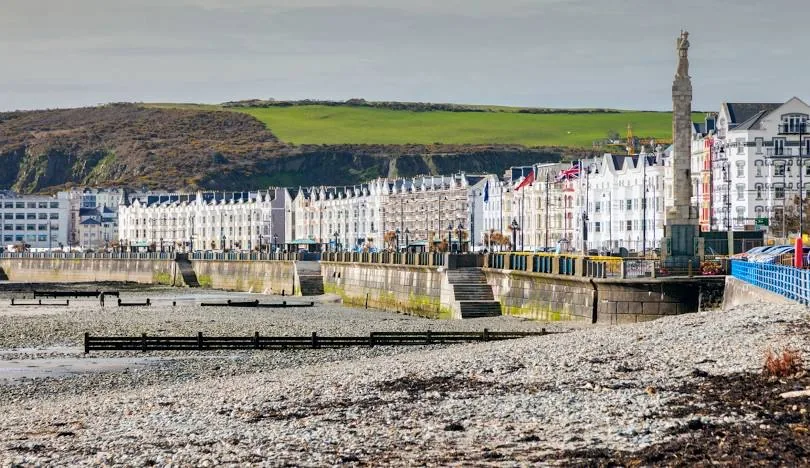 Significant strategic infrastructure projects are already underway to support this integrated vision. Beyond the port and digital upgrades, major urban regeneration is revitalising key areas. The Lord Street redevelopment in the capital, Douglas, is a prime example, transforming a former bus station into a mixed-use site with a hotel, cinema, and residential flats. This, alongside the government's Island Infrastructure Scheme to develop brownfield sites, demonstrates a holistic commitment to long-term economic and social growth.
Ultimately, the Isle of Man presents a powerful investment case as a "Smart Island" testbed for maritime and digital futures. It offers a unique combination of regulatory freedom, geographic advantage, and a clear policy vision. With targeted investment opportunities in green port infrastructure (£50M), subsea fibre expansion (£30M), and a Smart Island Innovation Fund (£25M), the island is realistically poised to become a fully integrated hub for green logistics, digital innovation, and sustainable finance by 2030.
IRISH SEA FRAMEWORK
The Irish Sea Framework[38] is a government-led informal framework developed to guide and influence actions that increase economic co-operation across and around the Irish Sea region. It aims to provide strategic direction in the short term and a pathway to medium term goals. The Framework is flexible and will evolve and complement relevant policies, strategies and programmes. These will include the Ireland-Wales Shared Statement 2030[39] and any developments around Interreg programmes[40].
The Framework is led by the Welsh Government along with its partners in the Devolved Governments, the Scottish Government and the Northern Ireland Executive. The Irish Government has also confirmed that it wants to sustain and build upon the projects and partnerships developed through engagement in EU funding programmes. The Framework reflects the geographical region defined by the Irish Sea, Celtic Sea and North Channel, specifically referencing Wales, Ireland, Scotland, Northern Ireland, North West England, South West England and the Isle of Man.
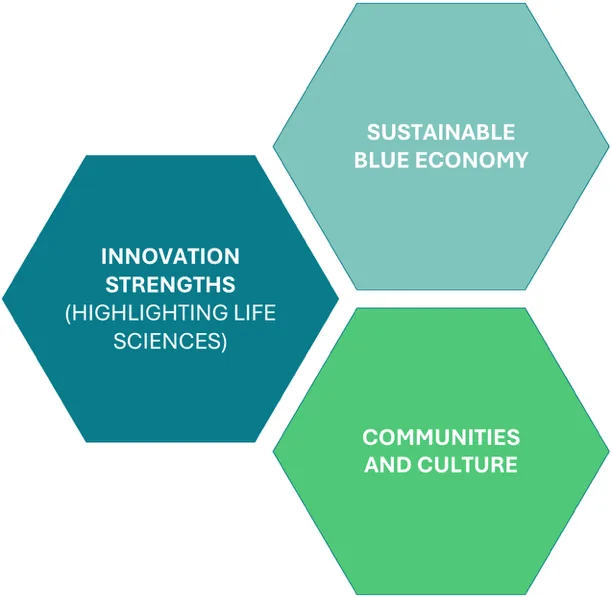 The Framework will support any activity that: mobilises economic co-operation across and around the Irish Sea region; adds value to existing activity; delivers economic and social benefits. This will include: increasing engagement, highlighting strengths, identifying opportunities, building partnerships and networks, piloting activity and influencing funders.
The Framework identifies three broad priority areas for co-operation: Sustainable Blue Economy, Innovation Strengths (highlighting life sciences) and Communities & Culture. These are not exclusive and can evolve but will guide prioritisation of resources, actions and funding in the short term. Figure 9.3: Irish Sea Framework
Priority Areas
The Framework is not a funding programme, it aims to maximise the impact of existing resources and lever in investment where possible. Funding programmes aligned with the Framework may emerge in the future, but this is not guaranteed. It does recognise the role of seed funding, and the Welsh Government has supported a range of small collaborations and network projects through its Agile Cymru[41] programme. There are also examples of other nations aligning funding in a similar way.
There has been strong stakeholder engagement in the Framework, building on the legacy of EU funding investments. A ‘coalition of the willing’ approach has encouraged stakeholders to take forward actions and this has maintained multi-region networks in the three themes despite limited funding.
Recent developments include the €500k Developing Irish Sea Cooperation (DISC) project [42], supported by PEACEPLUS[43]. This brings together Ireland’s Southern Regional Assembly, Executive Office Northern Ireland, Welsh Government and Scottish Government to prepare the ground for future North-South and East-West cross-border cooperation. DISC reflects many of the principles of the Irish Sea Framework and demonstrates the increasing engagement of Ireland in the concept of an Irish Sea region. Political support for DISC was reflected in a specific reference in the joint Foreword of Tánaiste Simon Harris TD and First Minister of Wales Eluned Morgan in the Ireland-Wales Shared Statement 2030.
DISC is still underway but early findings suggest that intergovernmental cooperation should continue. There is clearly potential for these government led activities to complement the Irish Sea Rim Investment, Innovation and Enterprise Zone, bringing strategic actions together with practical delivery and maximising the impact of limited resources.
BARROW IN FURNESS
Barrow-in-Furness is experiencing unprecedented opportunities. Located at the tip of the Furness Peninsula in Cumbria, and bordered by Morecambe Bay, the Duddon Estuary, and the Irish Sea, Barrow is a coastal town with a rich maritime and industrial heritage, which is set to benefit from a significant wave of investment which will run to 2040 and beyond. Barrow is becoming a model for place-based regeneration, where defence, sustainability, and community development go hand in hand. The investment masterplan describes the need for partnership working to attract investment, stimulate growth, improve environments, and create stronger opportunities for the town.
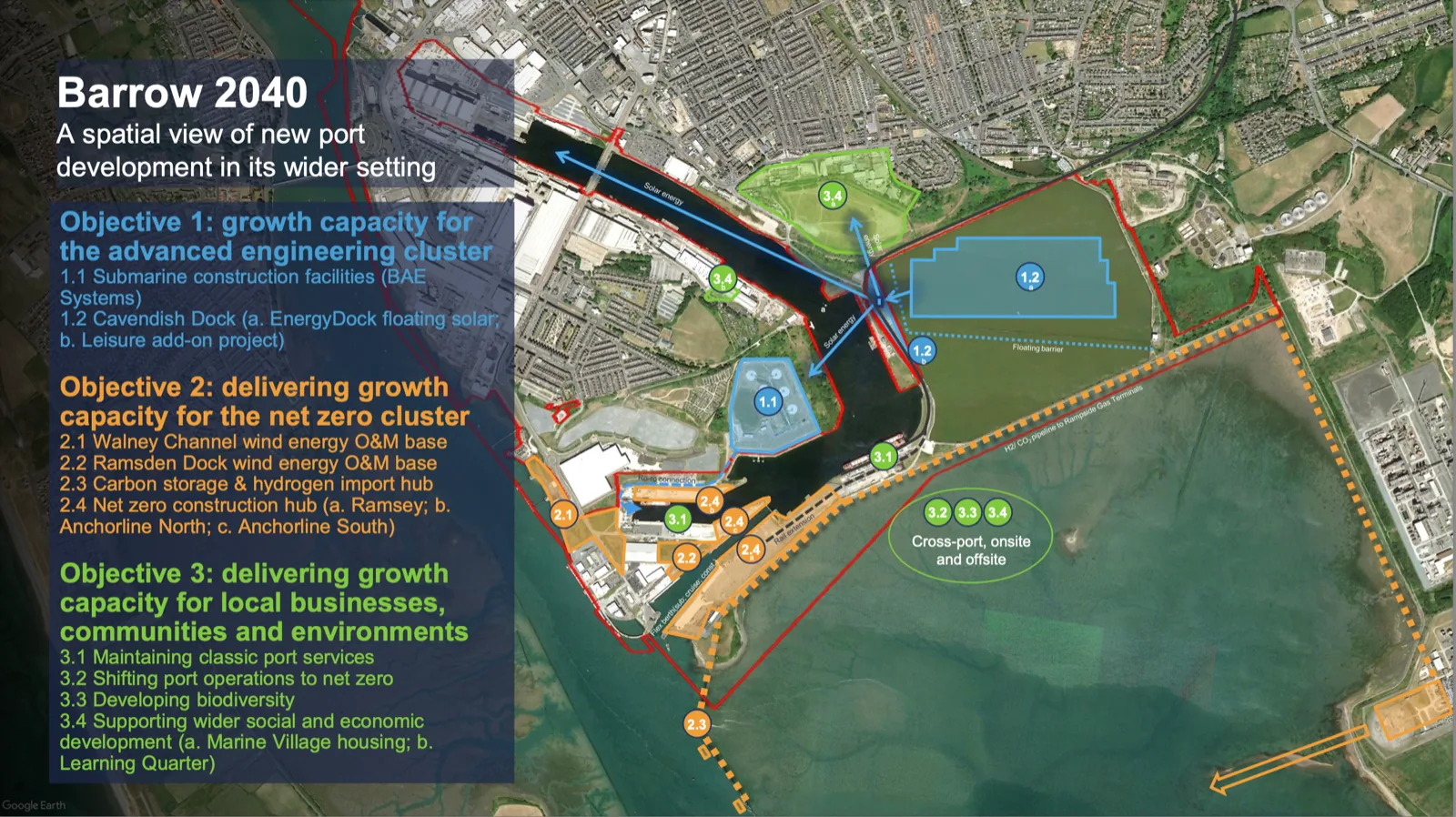
Image credit: Associated British Ports[44]
Barrow Rising is a bold regeneration initiative backed by £220 million in government investment, aiming to reshape Barrow into a thriving, inclusive, and future-ready town. The strategic goals are to make Barrow a better place to live, work, study, and invest, Support the town’s role in national defence, and prepare for population growth and workforce expansion. Core themes are Town Centre and Housing, Public Service Reform, and Creating Conditions for Growth. These will be supported by flagship projects, including a £5m investment in primary and secondary education, a new University of Cumbria Campus creating the first ever higher education hub in Barrow, and improved rail and road links to support mobility and logistics.
MORECAMBE NET ZERO (MNZ) is a key project operating out of Barrow through Spirit Energy who are leading this initiative with the Peak Cluster Partnership. With over 40 years experience of operating the Morecambe Bay Gas Fields, Spirit Energy is the ideal company to lead on MNZ.
Through its strategic location off the coast of Barrow in Furness, CO2 will be transported by pipeline, ship or rail, offering a long-term decarbonisation solution for emitting industries. This will allow carbon-intensive businesses all over the UK to remain productive whilst meeting the UK’s Net Zero targets. Storelectric are a company working to store excess wind energy in aged oil/gas wells and salt caverns for large scale energy storage in Morecambe Bay and the wider Irish Sea Rim, linked to OSW in the Irish Sea as a region.
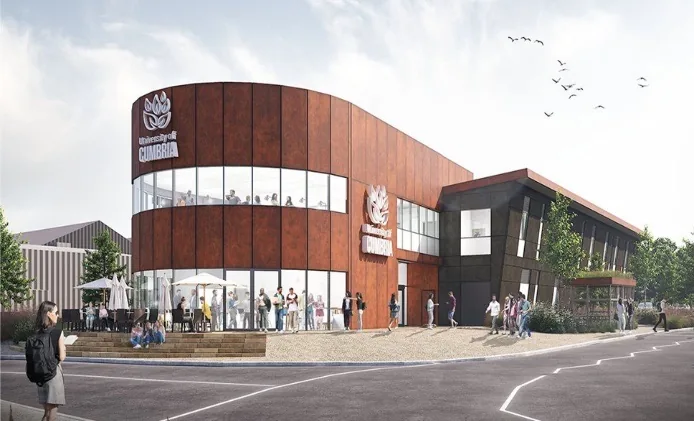
The new University of Cumbria Barrow campus, located on Buccleuch Dock, provides the benefits and value of higher education for learners, businesses, and the local area. The University campus will form part of the Barrow Learning Quarter.
This initiative will focus particularly on supporting Barrow to become a powerhouse for green shipping, defence innovation, and regional job creation.
- GREEN SHIPPING AND PORT TRANSFORMATION: The Port of Barrow, operated by Associated British Ports, is undergoing a major transformation to support both defence and sustainability goals, including renewable energy integration, sustainable logistics, and support for offshore wind and clean maritime fuels. The creation of Barrow Energy Dock, and expansion of submarine section manufacturing capacity positions Barrow as a dual-use port serving both strategic defence and climate-forward shipping.
- DEFENCE INNOVATION – SUBMARINES AND SKILLS: Barrow is home to BAE Systems’ submarine shipyard, a skills and innovation engine where the UK’s Astute, Dreadnought, and SSN-AUKUS submarines are built. This industrial cluster is driving advanced engineering, digital innovation, and supply chain resilience across the UK BAE Systems plans to hire 801 apprentices and graduates in 2025 alone, while the University of Cumbria campus beside the Submarines Academy will offer degrees in engineering, computer science, and nursing. The NWRDSC covers Barrow in Furness.
- REGIONAL JOB CREATION AND ECONOMIC GROWTH: The Barrow Rising initiative aims to reshape Barrow by 2035 through the creation of thousands of new homes and a revitalised town centre to support population growth, investment in education, transport, and public services to attract and retain talent, and partnerships with developers and employers to deliver apprenticeships, training, and high-skilled jobs.
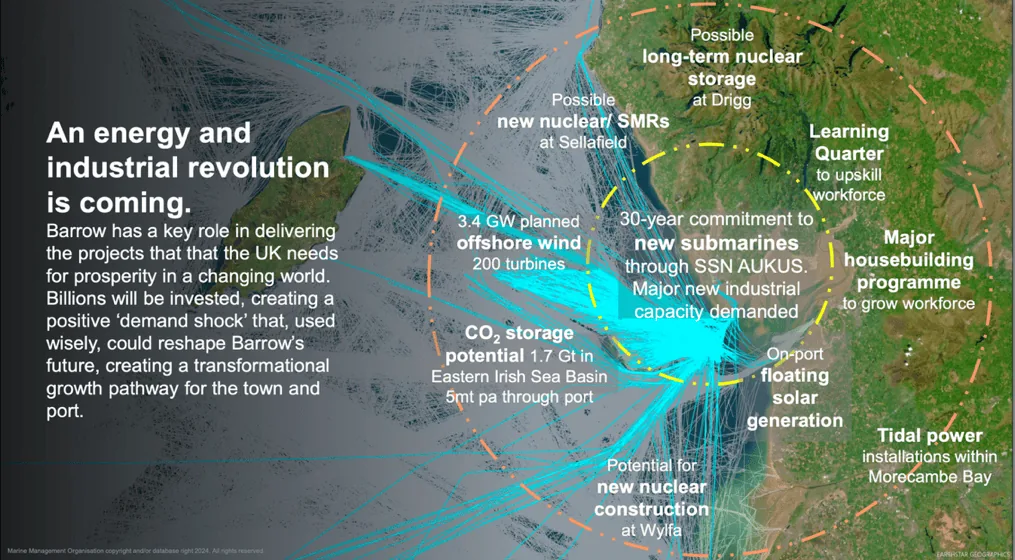 Image credit: Associated British Ports
SILICON SANDS & BLACKPOOL ENTERPRISE ZONE
This exciting transformation happening in Blackpool through Silicon Sands and the Blackpool Airport Enterprise Zone is a story of digital innovation, clean energy, and regional regeneration. This location on the edge of the Irish Sea makes it a key strategic partner and collaborator with the Irish Sea Rim. The proposal for Silicon Sands is a high technology business park, centred around low carbon data centres, powered by renewable energy. Having low carbon data centres at the Enterprise Zone will make the area attractive for new, data-heavy companies such as advanced manufacturing, Artificial Intelligence, virtual reality, gaming or tele-health sectors.
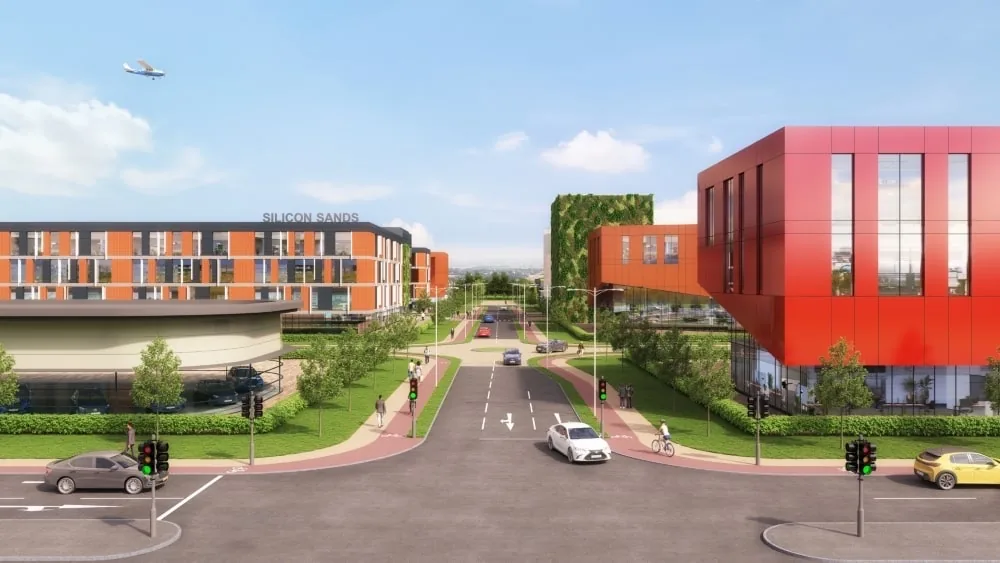 Blackpool Airport Enterprise Zone was established in 2016 and spans 144 hectares. It includes Blackpool Airport, business parks, and surrounding land. It is one of the UK’s largest zones and is set to drive £300 million in investment by 2040.
Silicon Sands is a cutting-edge development within the Blackpool Airport Enterprise Zone, designed to become a digital-led campus for high-performance computing and data-intensive industries. Silicon Sands data centres could be powered by renewable power such as solar or wind, and the data centre itself would be cooled using liquid immersion, a technique where the data centre cabinets are submerged in a liquid tank to keep them cool.
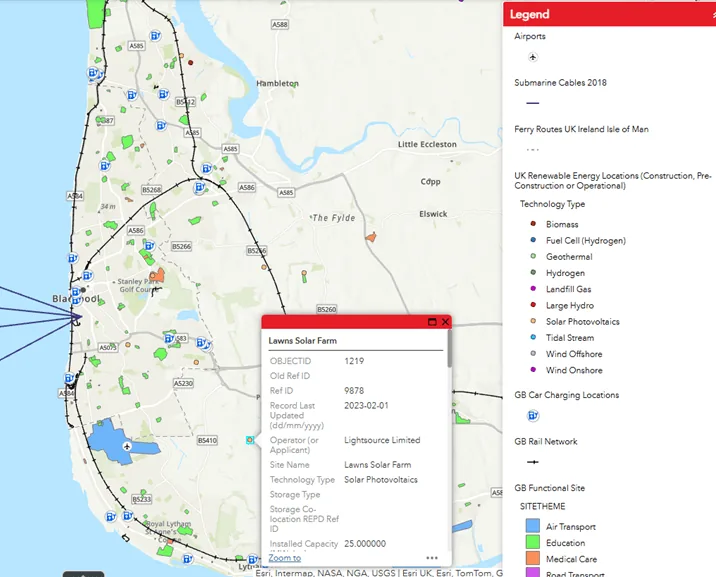
As that liquid warms up, it would then be used to heat surrounding businesses in a district heat network, meaning the renewable energy can be used twice, making it very energy efficient and well as creating more jobs.
The strategic goals of the development are to attract data centre investors and operators, support Blackpool’s Digital Vision and climate goas, and create high-tech jobs in a climate-conscious ecosystem. Key features will include:
- GREEN DATA CENTRES: Powered by renewable energy (solar, offshore wind, battery storage), cooled using liquid immersion technology to reduce energy use by up to 60%.
- DISTRICT HEAT NETWORK: Waste heat from data centres is reused to power nearby buildings, lowering energy bills and carbon footprint.
- SUBSEA CONNECTIVITY: Direct access to the CeltixConnect-2 fibre-optic cable, linking Blackpool to New York in under 64 milliseconds. Ideal for AI, gaming, telehealth, and advanced manufacturing (see figure below).
- DEVELOPMENT POTENTIAL: 16-hectare site with 20,000 sq. m of land available; initial 6MW data centre demonstrator planned for 2025.
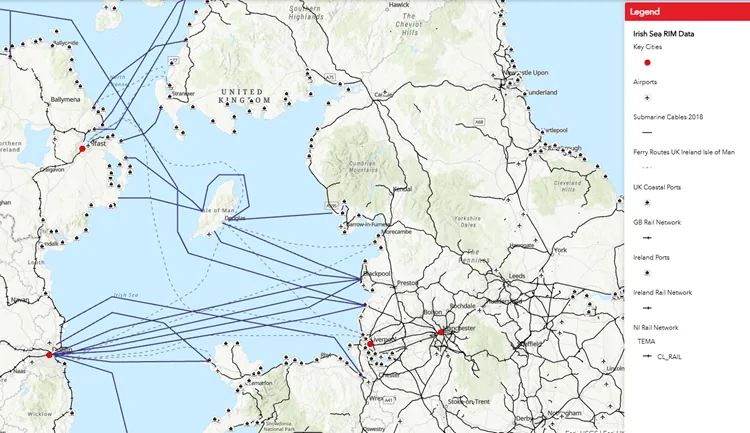
Highlights of the Silicon Sands and Blackpool Airport Enterprise Zone development include advanced manufacturing and aerospace, with designated space for aerospace engineering and commercial hangars; runway supports aircraft up to Boeing 737 and Airbus A321. The £9.8M Lancashire Energy HQ facility will train the next generation in nuclear, renewables, and energy tech. The Common Edge Sports Village will provide a new sports and recreation hub to support community and workforce wellbeing, while the Eastern Gateway Road Project will unlock 10.5 hectares of new commercial land for business growth. Sustainability and innovation plans include solar farms, battery storage, and district heating and integration with Silicon Sands to create a low-carbon tech ecosystem.
The development has significant potential to grow high value jobs. The Enterprise Zone has already supported 2,700+ new jobs as of late 2024, while forecasts suggest 5,000+ job opportunities across the Fylde Coast by 2024, spanning tech, logistics, energy, and advanced manufacturing. Silicon Sands will create additional high-value jobs in: AI and machine learning, data centre operations, telehealth and digital health services, gaming and esports development, and energy consultancy and green infrastructure
These are not only jobs, but they are also future-proofed careers in sectors that are growing globally.
WORKINGTON
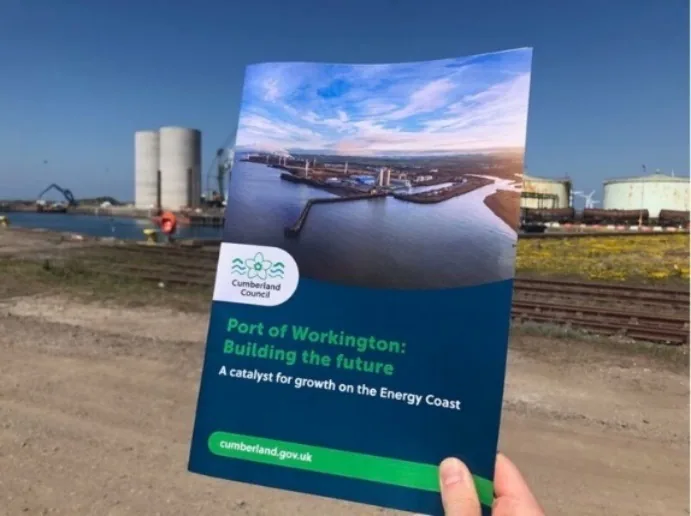
The Port of Workington, a municipal port on the Cumbrian coast owned by Cumberland Council, is strategically positioning itself as a key green logistics hub in the Irish Sea. Currently, it handles up to 500,000 tonnes of cargo annually, specializing in dry and liquid bulk, energy, project cargo, and forest products. The port spans 100 acres, with an additional 49 acres available for expansion, making it an ideal candidate for green infrastructure development and clean energy project. Its location provides direct access to the Irish Sea and proximity to major industrial centres, while its multimodal connectivity, including rail links via the Cumbrian Coast Line and road access, primes it for low-emission inland freight movement.
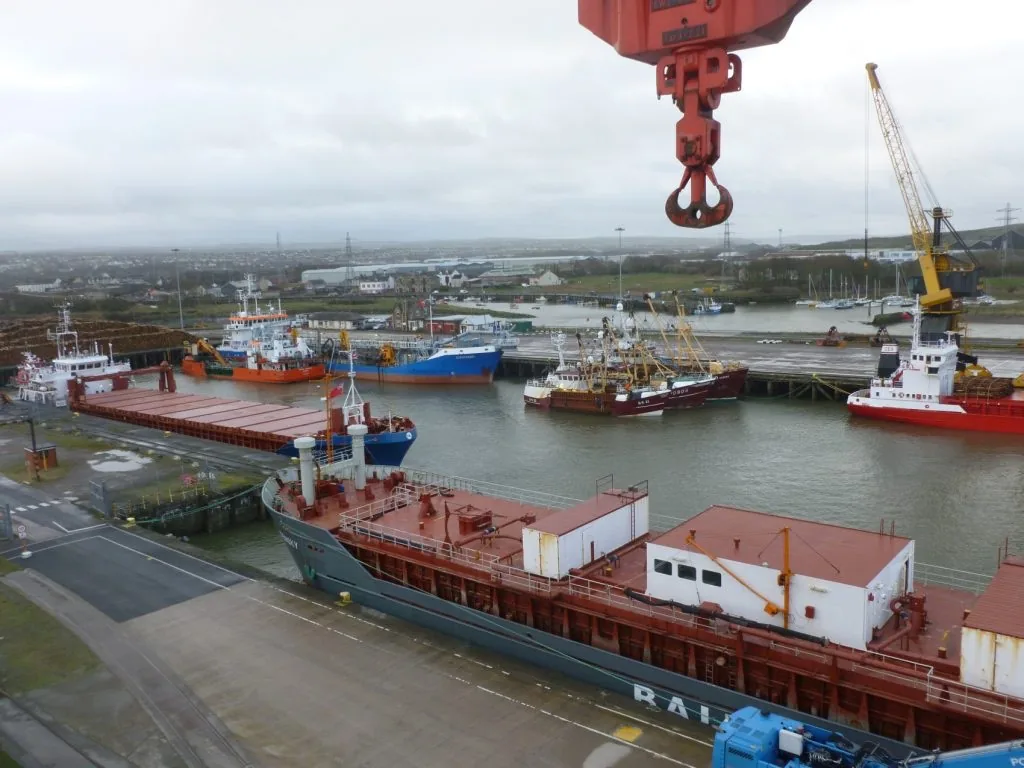 As a central part of Cumbria’s Clean Energy Coast, Workington has a clear vision to become a clean growth hub for energy, manufacturing, and logistics by 2040. The strategy involves acting as a feeder port for low-carbon and zero-emission shipping routes between major Irish Sea ports like Liverpool, Belfast, and Dublin. The port already supports the Robin Rigg offshore wind farm and is envisioned as a future base for green hydrogen production, vessel bunkering, and expanded offshore wind maintenance and assembly facilities. By integrating smart logistics, such as AI-driven scheduling and blockchain-based customs, with its physical infrastructure, the port aims to become a model for how smaller municipal ports can spearhead climate innovation.
This vision is supported by five strategic investment pillars:
- INFRASTRUCTURE MODERNISATION: Upgrade port facilities by expanding quay space, install shore-side power systems, and modernise cargo handling equipment. Enhance rail connectivity to improve the Cumbrian Coast Line and integrate with national freight networks to support low-emission hinterland logistics.: Continue land remediation of the Oldside site to unlock 49 acres for clean energy and logistics development.
- CLEAN ENERGY DEVELOPMENT: Invest in hydrogen production and bunkering infrastructure to support zero-emission vessels and port vehicles. Strengthen the offshore wind logistics base by expanding support for wind farm operations like Robin Rigg, including turbine assembly and maintenance facilities. Deploy renewable energy systems and support battery storage to power port operations and reduce grid dependency.
- DIGITAL & SMART PORT TECHNOLOGIES: Using AI-powered logistics, implement digital twins and predictive analytics for cargo flow, emissions tracking, and maintenance. Streamline cross-border trade with secure, transparent digital documentation. Maximise IoT integration to use sensors and automation to optimise energy use and reduce operational waste.
- WORKFORCE & INNOVATION ECOSYSTEM: Enable a green skills academy by partnering with local colleges and universities to train workers in clean tech, maritime logistics, and digital systems. Collaborate with research bodies and private sector innovators to pilot new technologies and attract research and development funding.
- PUBLIC–PRIVATE INVESTMENT MIX: Leverage existing funding by building on the £25 million already invested by the UK government and Cumberland Council.: Showcase opportunities at forums like UKREiiF to attract private capital, bringing in logistics, energy, and infrastructure investors. Align with Workington Town Deal and regional clean growth strategies to maximise co-investment
HOW THE IRISH SEA RIM COULD BE A COLLECTIVE UMBRELLA ORGANISATION FOR THE IRISH AND CELTIC SEAS AS A REGION
The Irish Sea Rim has the potential to operate as an umbrella organisation that links and supports the many collaborative organisations that also operate and support projects and initiatives across country borders, in and around the Irish and Celtic Seas Region, especially associated with the Blue Economy. During the research and writing of this report, we have discussed this concept with many relevant organisations and other conversations are ongoing.
The key opportunity here includes a larger and louder collective and collaborative voice for organisations working in, across and around the Irish Sea Rim as a region and within the countries that face that face the Irish and Celtic Seas.
Relevant organisations this initiative could include are (this list is not complete): Northern Ireland Maritime and offshore, Joining the Dots, Mersey Maritime, Maritime Belfast, Isle of Man Maritime, Irish Sea Maritime Forum, Dublin-Belfast Economic Corridor, Irish Sea Framework, Agile Cymru, Marine Ireland Industry Network, The Great North (Northern Powerhouse), Mersey Dee Alliance, NW Energy Alliance, Celtic Seas Partnership, Net Zero North West, Shared Island Fun (Ireland), Place and Culture North, Great South West (Celtic Seas), Maritime Mile (Belfast), Borderlands Initiative (Southern Scotland/Northern England), Morecambe Net Zero, Waterfront Promenade Framework, UK Freeports, All Ireland Smart City Forum, Cornwall Maritime Network, Barrow Rising (Barrow in Furness), Silicon Sands (Blackpool), British Irish Trade Alliance, BECBC, Northern Reach, Digital and Innovation Technology Clusters (e.g. Electech), etc.
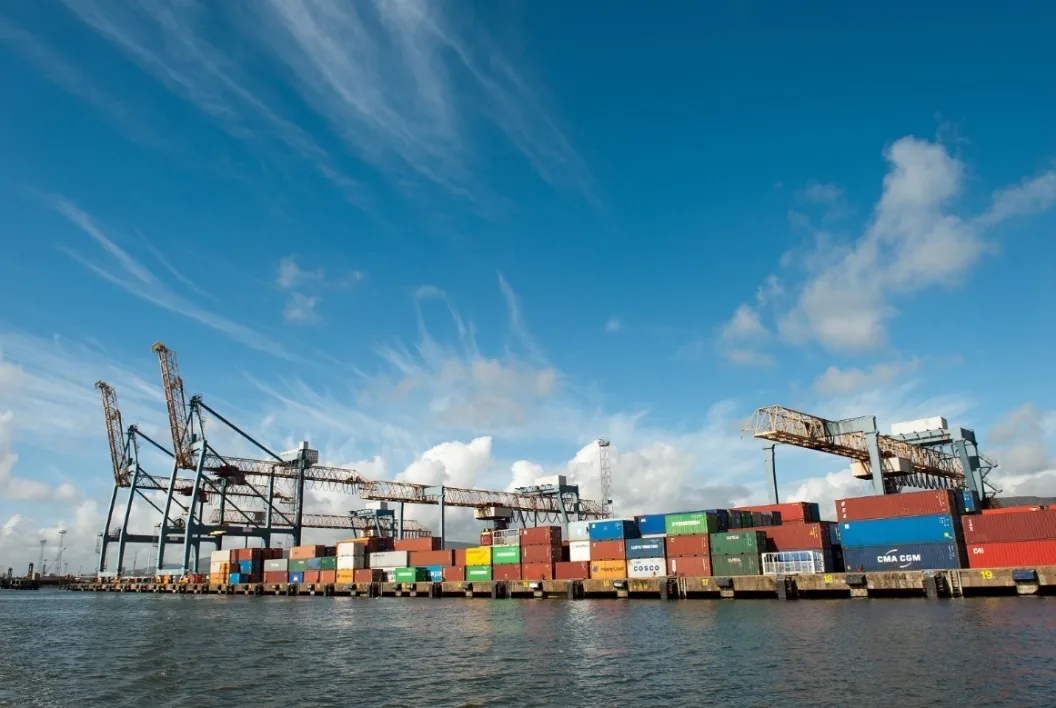
Container ship in Belfast Port, Image credit: unknown